
Best Ankle Brace for Snowboarding Canada
Best Ankle Brace for Snowboarding Canada: Choose Support for Boots, Edges, and Cold-Weather Fit
Direct answer: The best ankle brace for snowboarding in Canada is the lowest-bulk support that fits safely inside your exact snowboard boot, liner, sock, and footbed setup. Start with compression or open-heel active support; choose strap-guided or rigid bracing only when stability needs outweigh boot pressure, edge feel, and circulation concerns.
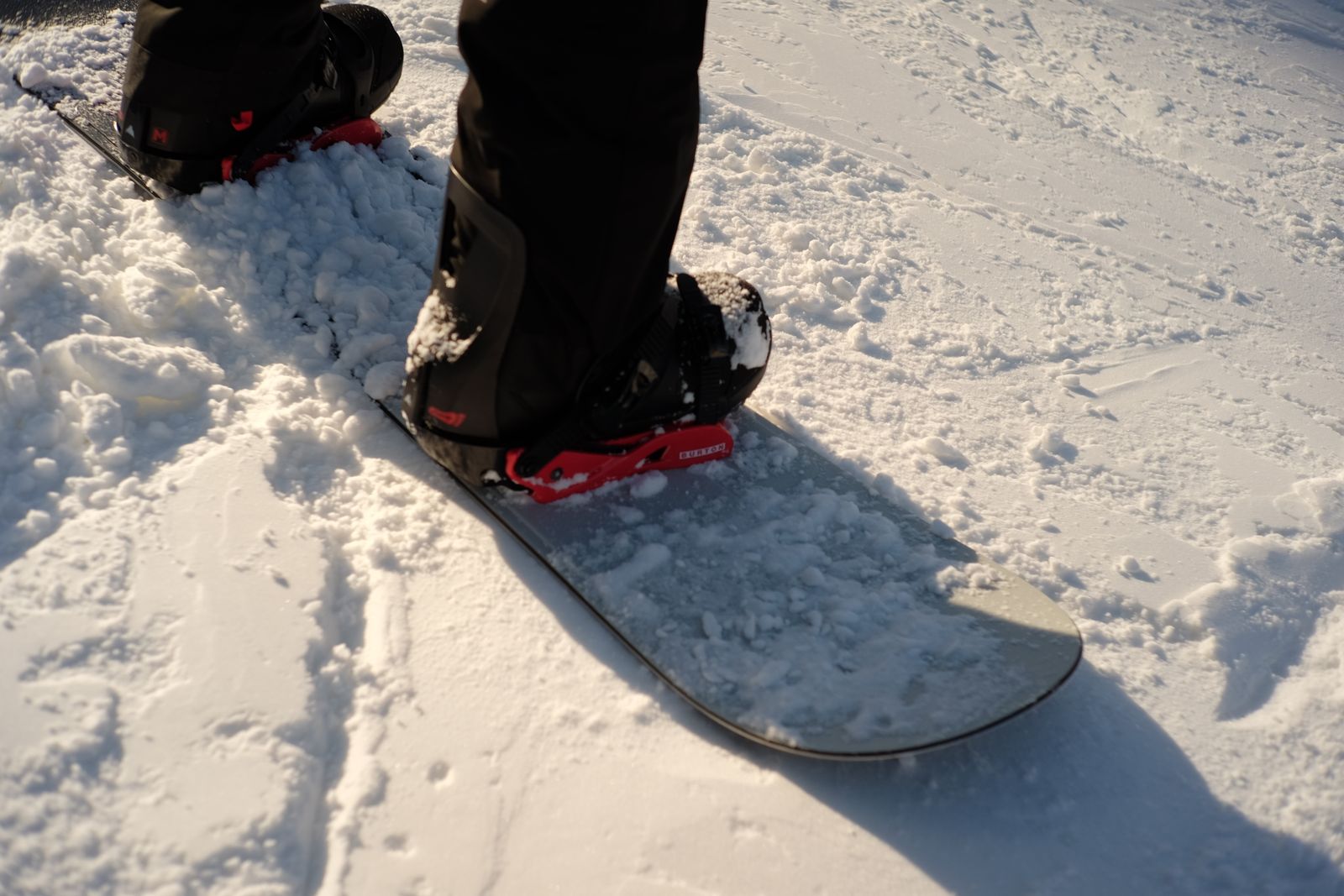
Canadian shopping route • Active Medibrace ankle supports • Snowboard-boot-specific support and fit logic
Quick selector: choose by snowboarding scenario
| If your snowboarding need is... | Choose this support type | Medibrace option | Why it fits snowboard boots |
|---|---|---|---|
| Mild support with the lowest bulk under snowboard socks | Knit compression ankle sleeve | Bauerfeind MalleoTrain | Compression-first route that avoids strap bulk inside a stiff boot shell. |
| More guidance but heel bulk or boot hot spots are a concern | Open-heel active ankle brace | MalleoTrain S Open Heel | Lets riders compare strap-guided support with less heel coverage. |
| You need more support and your boot has enough volume | Active strap-guided ankle brace | Bauerfeind MalleoTrain S | Adds guidance, but must pass boot-pressure and circulation checks. |
| Strong lateral control is being considered | Semi-rigid ankle stabilizer | Bauerfeind MalleoLoc | Mainly a comparison/off-snow route because rigid shells can crowd snowboard boots. |
What changes for snowboarding?
Snowboarding is not a generic ankle-support situation. The boot already acts like a stiff support shell, and the brace has to fit inside a liner, under snowboard socks, around footbeds, and through long periods of cold. A brace that feels fine in a running shoe can create pressure, numbness, or edge-control changes once the boot is tightened.
The support type should change with the scenario. If you mainly want warmth-friendly compression and a smoother boot fit, start with a low-bulk sleeve. If the ankle needs more guidance and the boot has enough room, an open-heel or strap-guided active brace may be worth comparing. If you need rigid control, this page may not be the right route for actual riding; clinician guidance, boot fitting, or an off-snow support route may be safer.
If your real activity is skiing, compare the general sports ankle brace route because ski boots create a different shell-fit decision. If you need support for hiking boots or trail running, use those activity-specific pages because footwear volume and impact patterns are different.
Recommended Medibrace ankle brace options for snowboarding
Bauerfeind MalleoTrain Ankle Brace
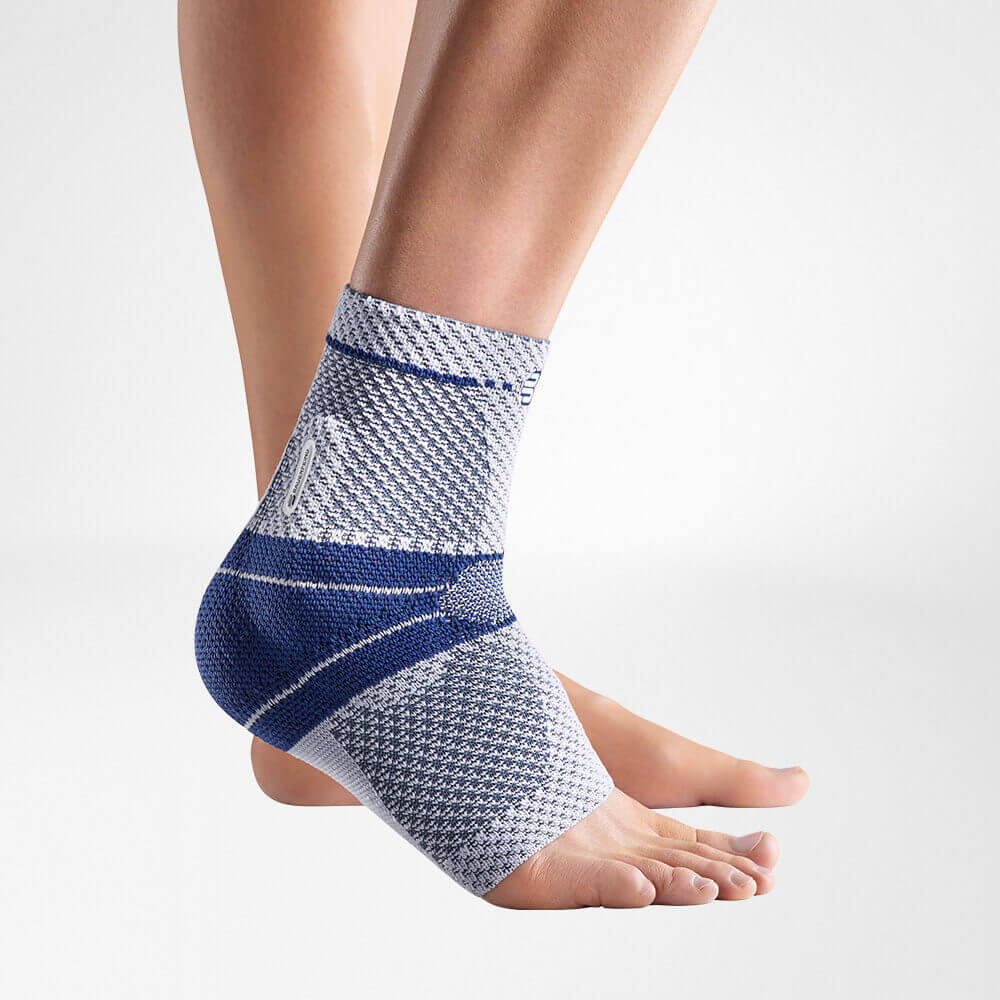
- Role: Best low-bulk compression route for snowboard boots
- Support type: knit compression ankle sleeve
- Price: $150.00
- Best for this snowboarding scenario: riders who want mild compression and a smoother fit under snowboard socks without adding straps inside a stiff boot shell
- Tradeoff: less lateral stabilization than strap or rigid braces; not enough if the ankle is unstable or recently injured
Bauerfeind MalleoTrain S Open Heel Ankle Brace
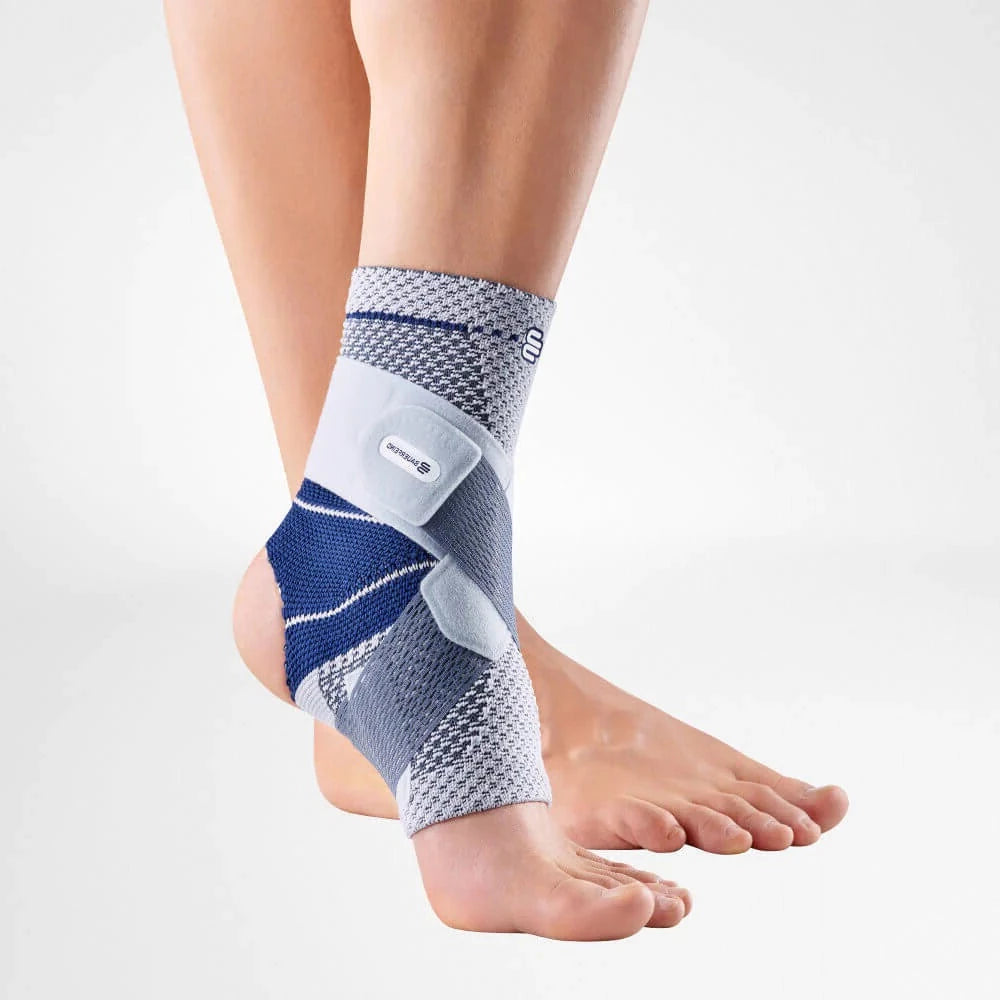
- Role: Best open-heel snowboard-boot fit alternative
- Support type: open-heel active ankle brace
- Price: $170.00
- Best for this snowboarding scenario: riders who want strap-guided support but need to reduce heel bulk or hot-spot risk inside a snowboard boot
- Tradeoff: strap edges and open-heel feel must be tested with the exact boot, sock, and liner setup before riding
Bauerfeind MalleoTrain S Ankle Brace
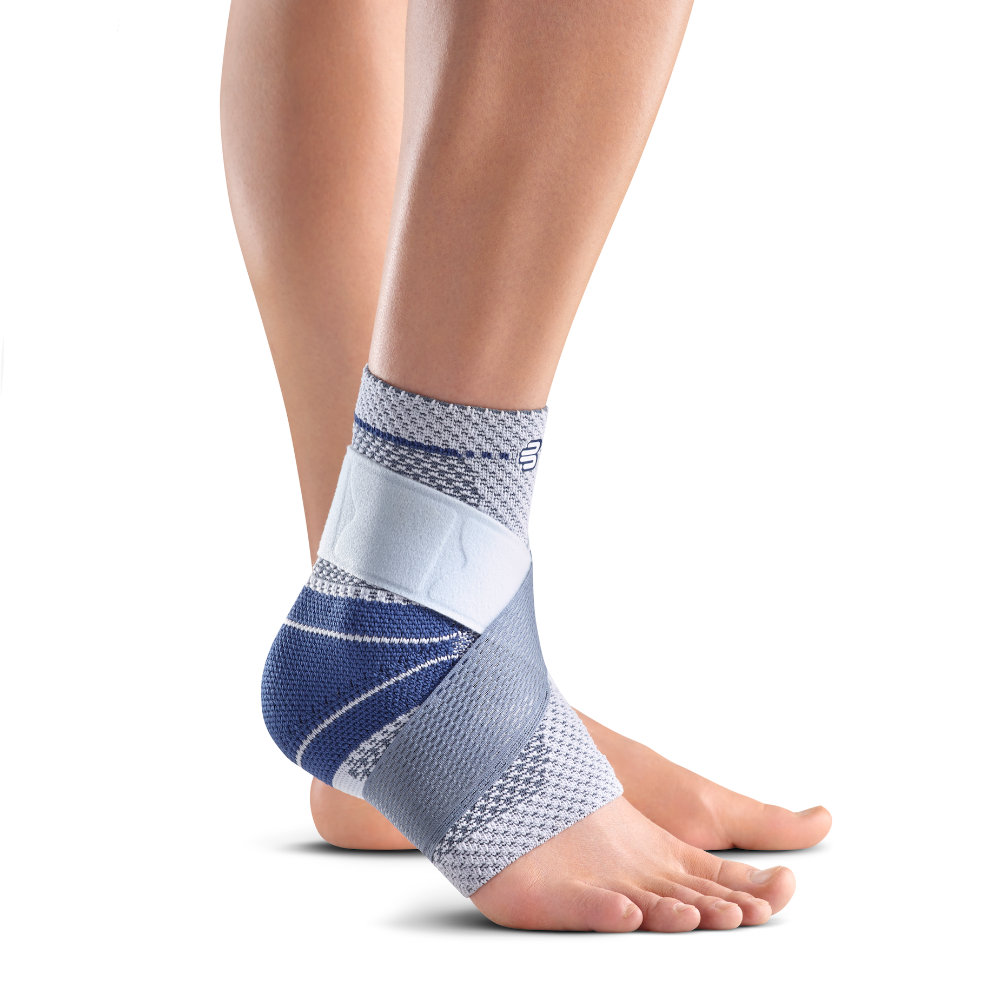
- Role: Best strap-guided support when boot volume allows
- Support type: active ankle brace with strap guidance
- Price: $170.00
- Best for this snowboarding scenario: snowboarders who need more guidance than a sleeve but still want a flexible active brace rather than a rigid shell
- Tradeoff: may crowd tight snowboard boots; pressure points can worsen in cold conditions or long chairlift runs
Bauerfeind MalleoLoc Ankle Brace
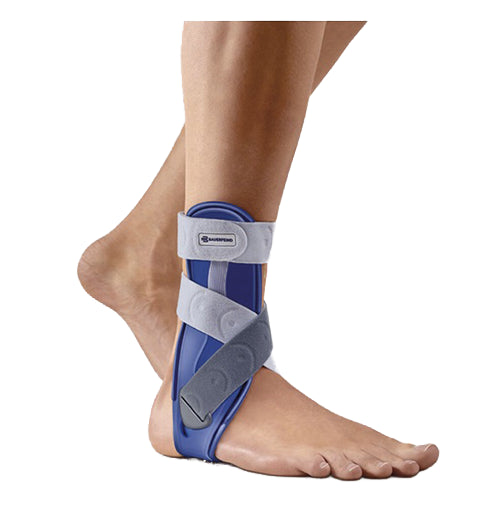
- Role: Best rigid-control comparison for off-snow or roomy boot checks
- Support type: semi-rigid ankle stabilizer
- Price: $240.00
- Best for this snowboarding scenario: buyers comparing stronger lateral control after clinician guidance, especially for off-snow support or very roomy footwear rather than a tight snowboard boot
- Tradeoff: usually too bulky or pressure-prone for many snowboard boots and should not replace clinical return-to-sport advice
Snowboarding ankle brace comparison and tradeoffs
| Choice | Best snowboard use | Main advantage | Watchout |
|---|---|---|---|
| Compression sleeve | Mild support under socks and liners | Lowest bulk and smoother layering | Least lateral stabilization |
| Open-heel active brace | Guidance with less heel coverage | May reduce heel hot-spot risk | Straps still need boot testing |
| Strap-guided active brace | More support if boot volume allows | More guidance than a sleeve | Can crowd tight boots or affect circulation |
| Rigid stabilizer | Off-snow support or clinician-directed comparison | Stronger side-to-side control | Often too bulky inside snowboard boots |
Fit, use, and safety guidance for snowboard boots
- Test the brace with your actual snowboard boot liner, footbed, sock thickness, and lacing or BOA tension.
- Check ankle bones, heel pocket, instep, toes, and circulation before riding and again after a short indoor wear test.
- Avoid any brace setup that causes numbness, tingling, skin colour change, cold-related discomfort, or altered edge control.
- Do not use a brace to ride through a new injury, sharp pain, repeated giving-way, or swelling.
- For return-to-sport decisions, severe symptoms, or post-procedure instructions, use a licensed clinician and qualified boot fitter rather than self-selecting from a product page.
When this page is not the right route
This page is for snowboarders comparing ankle-brace support, boot volume, sock layering, cold-weather pressure, and edge-control tradeoffs. It is not the right route for a new ankle injury, suspected fracture, severe swelling, inability to bear weight, numbness, post-surgical instructions, or snowboard boot fit problems that need shell/liner work.
Health and safety note: This Medibrace guide is general product-selection information only. It does not diagnose, prescribe, or replace advice from a licensed clinician.
Related Medibrace routes
Choosing ankle support for snowboard boots
For snowboarding, the brace has to work inside a stiff boot without creating pressure points. Look for low-profile ankle support that adds stability for edge changes, landings, and long days on snow while still fitting cleanly under your boot liner.
If you need gentle everyday compression or support after a recent sprain, choose a less sport-specific option. For sprain recovery, start with our ankle sprain recovery brace guide. For the full range of ankle supports, browse the foot and ankle brace collection.
FAQ
What ankle brace is best for snowboarding?
For snowboarding, the best ankle brace is usually the lowest-bulk support that fits safely inside your exact boot and sock setup. Many riders should compare a compression sleeve or open-heel active brace before considering strap-heavy or rigid options.
Can I wear an ankle brace inside snowboard boots?
Sometimes, but boot volume is the hard gate. Test the brace with your liner, snowboard sock, footbed, and buckling or lacing tension before riding, and stop if it creates numbness, pressure, or altered control.
Is a snowboarding ankle brace the same as a skiing ankle brace?
No. Snowboard boots, stance angle, edge transitions, lateral loading, and sock/liner pressure differ from ski boots. Use the skiing route if your main context is ski-boot fit and skiing mechanics.
When is this page not the right route?
This page is not for fresh injuries, suspected fracture, severe swelling, inability to bear weight, numbness, or return-to-sport restrictions. It is also not a snowboard-boot fitting guide or a substitute for boot work by a qualified fitter or clinician.